MÜLL / Herde (Waste / Herd)
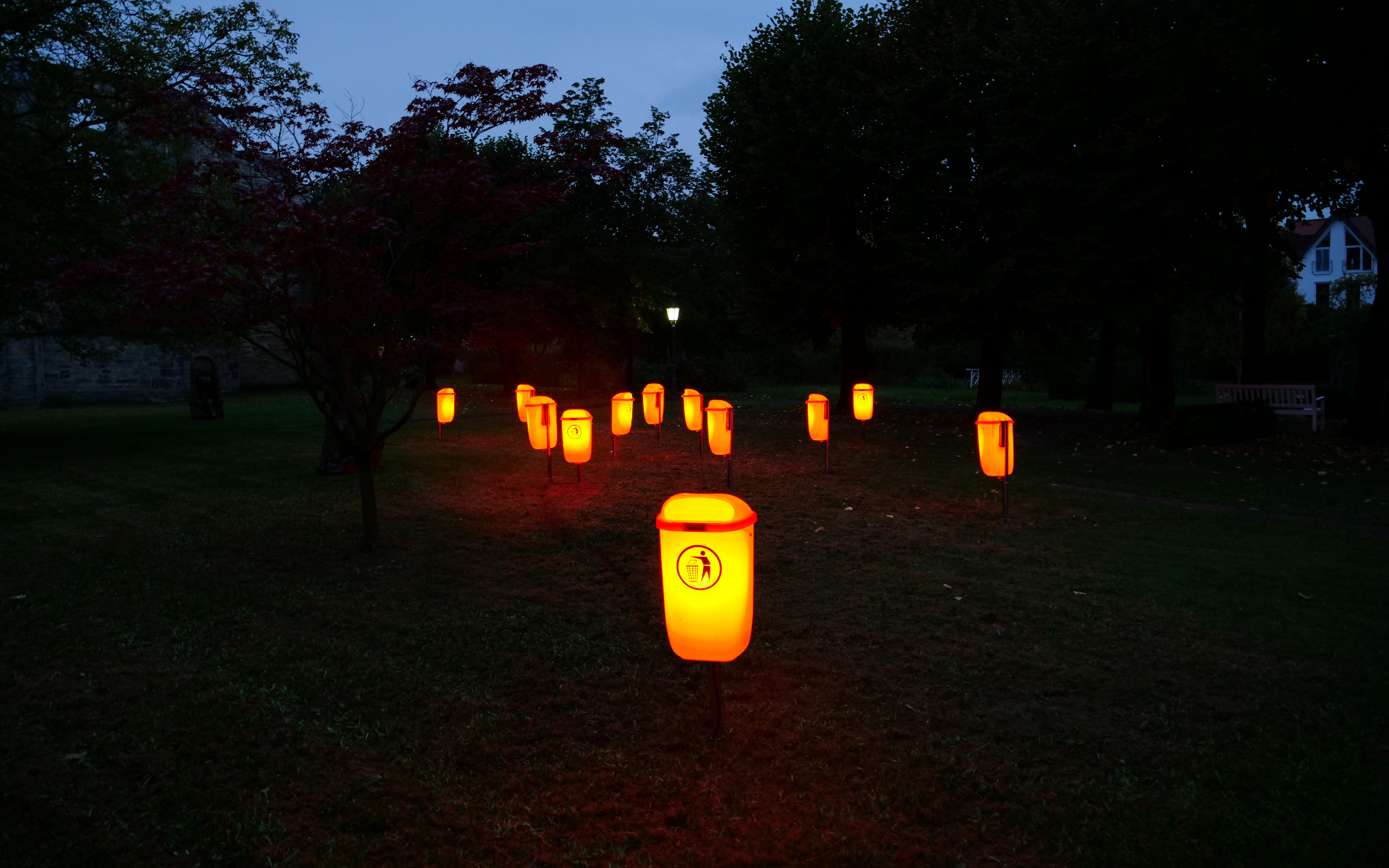
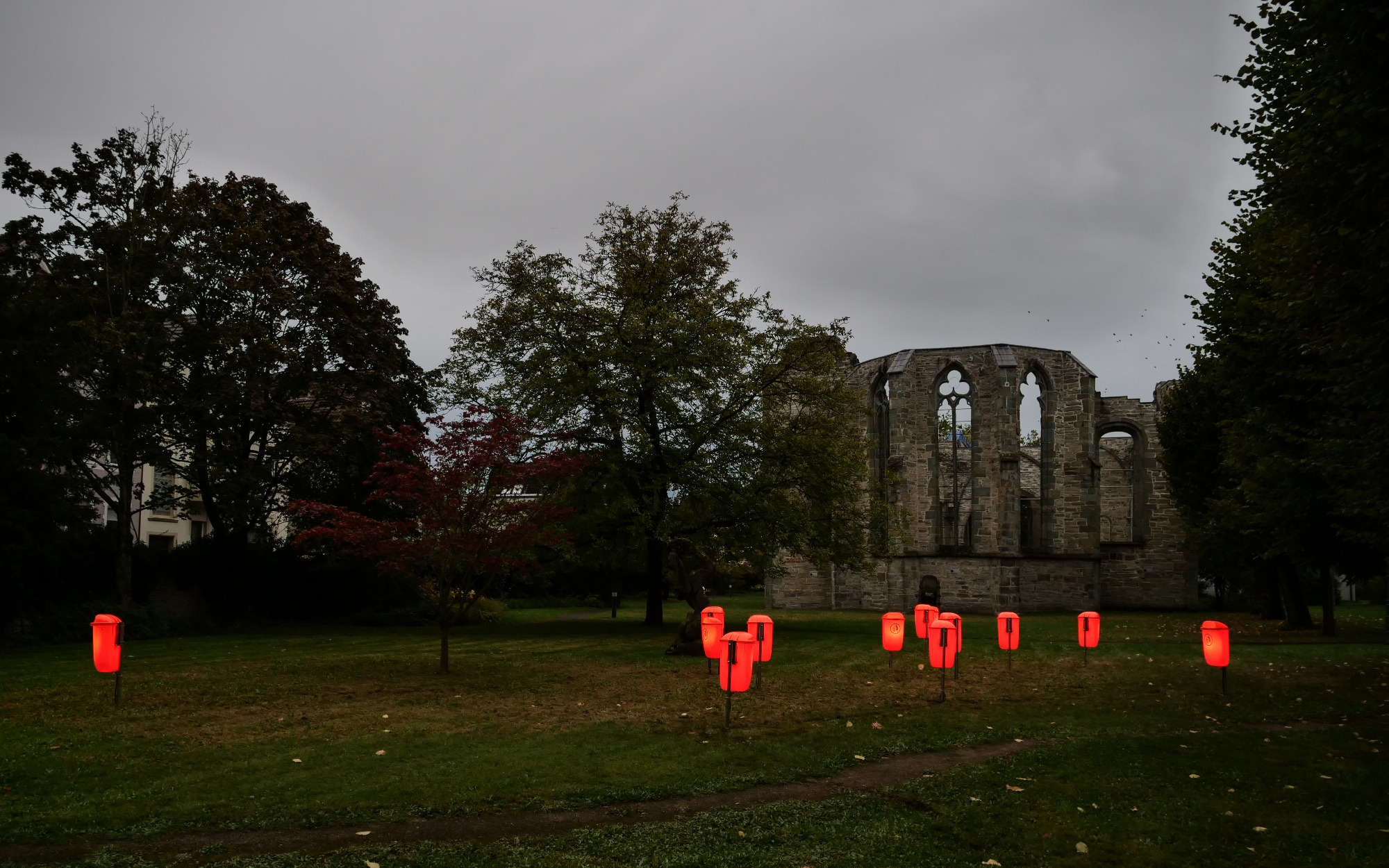
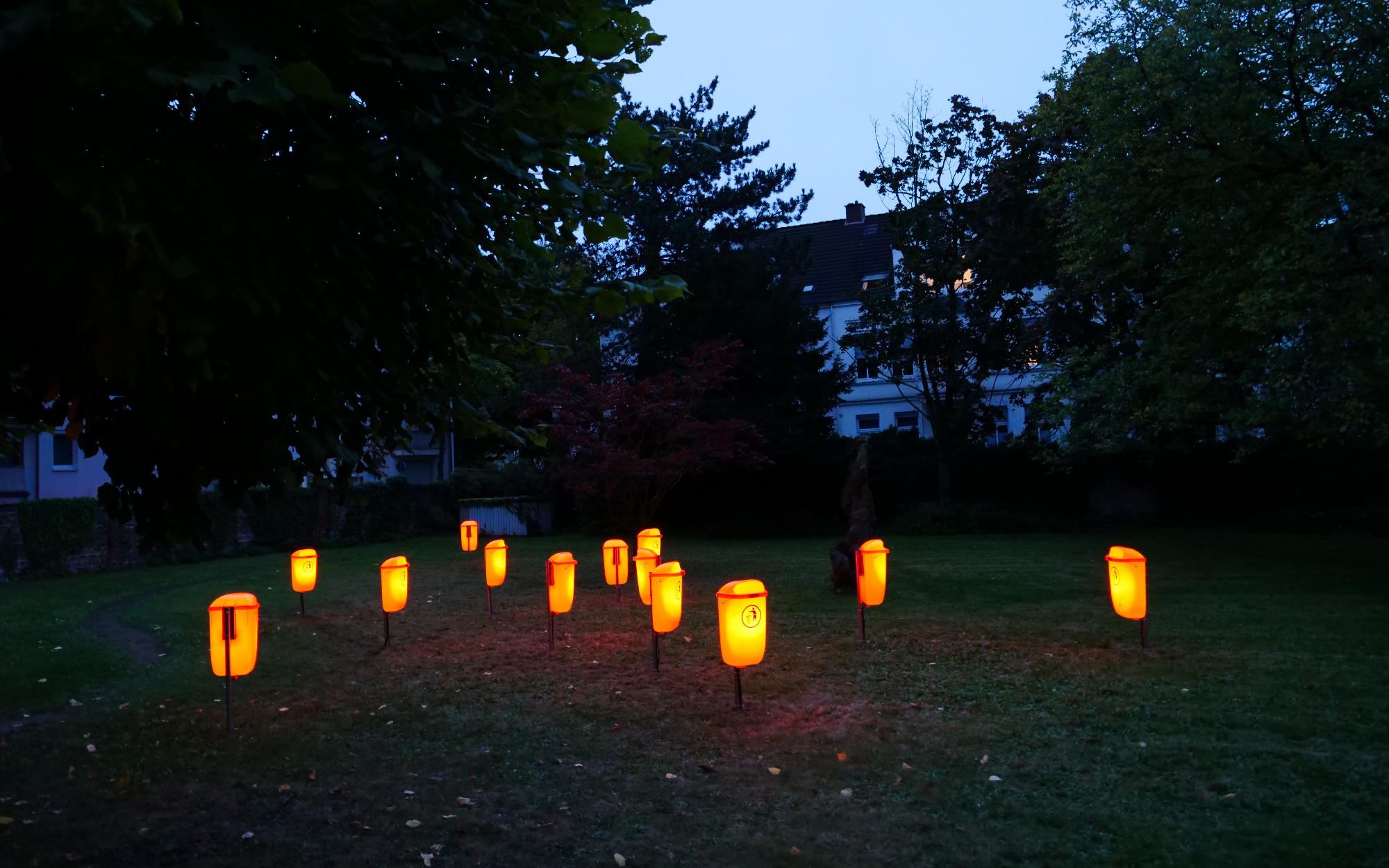
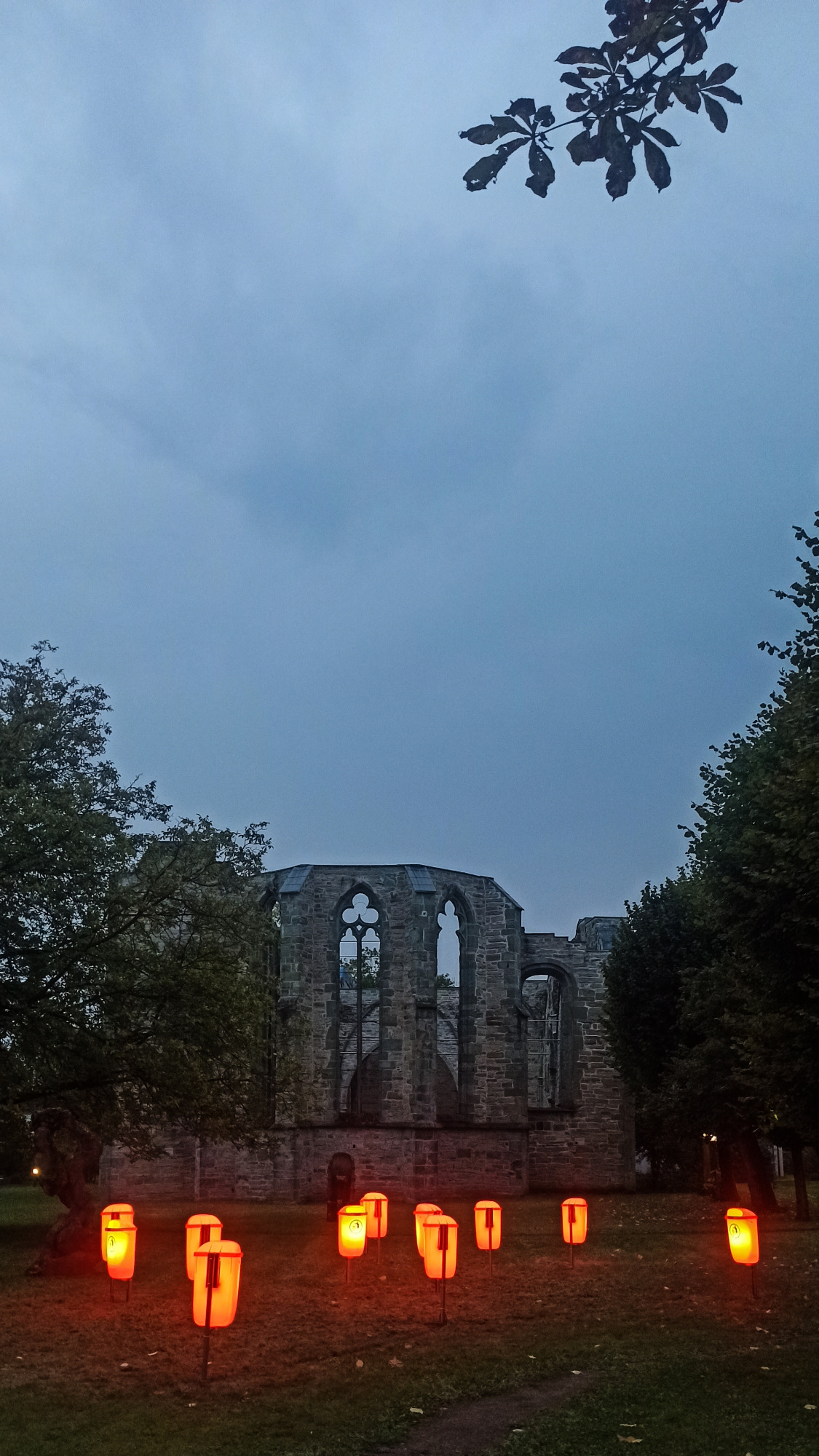
Light installation
Lichtpromenade Lippstadt (anniversary exhibition), 2024
13 orange plastic waste bins (DIN 30713), metal, cables, lighting
Dimensions variable
The city’s orange waste bins, standardised to DIN 30713, gather as a herd on the lawn of the Stiftspark. Whether they are drawn south or north, or whether they stay, is for the collective to decide. Roles shift, social bonds form anew. As dusk falls, the bins begin to glow from within. In stoic calm, they wait for morning.
ROTLICHT (Bruchstraße) (Red Light)
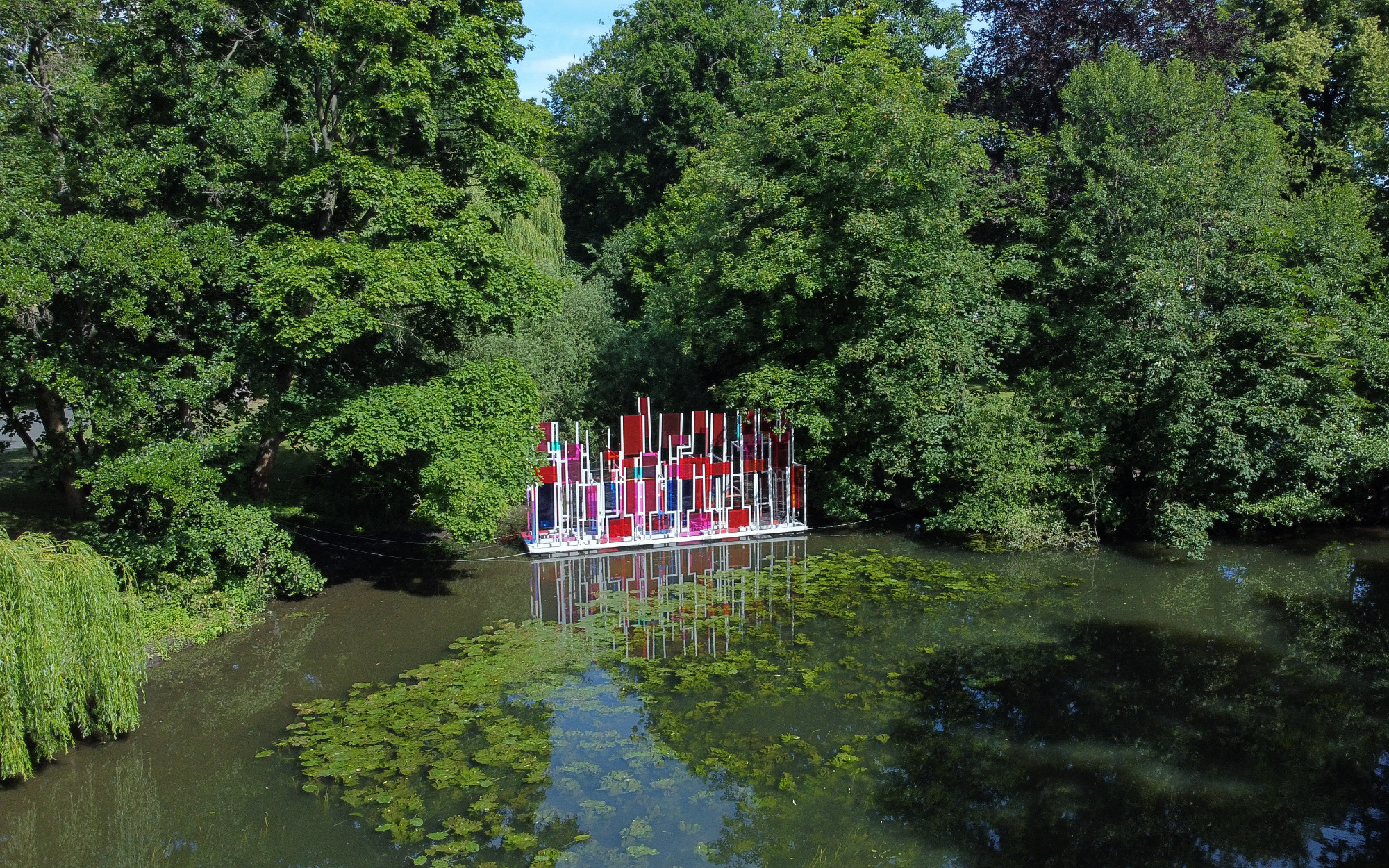
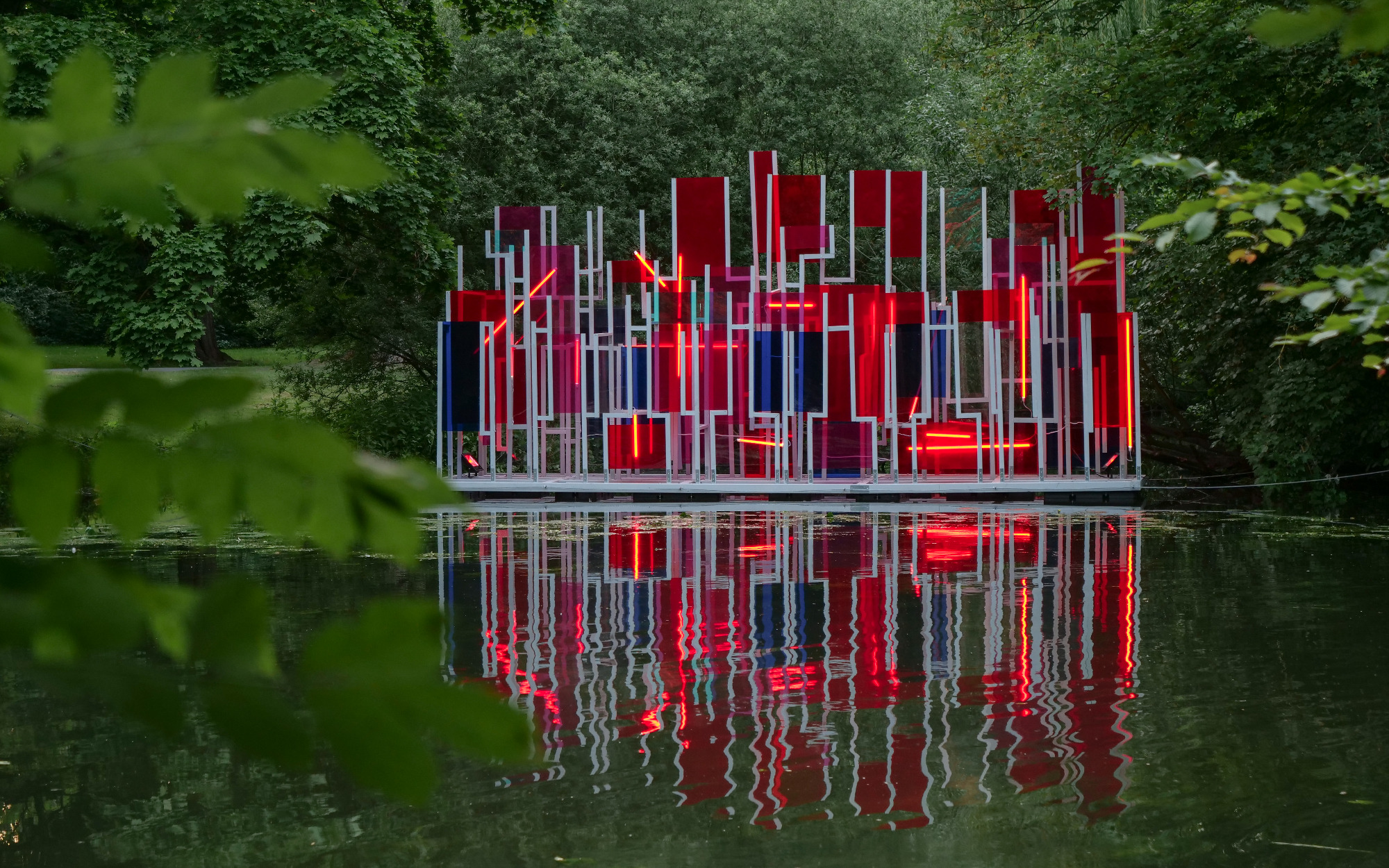
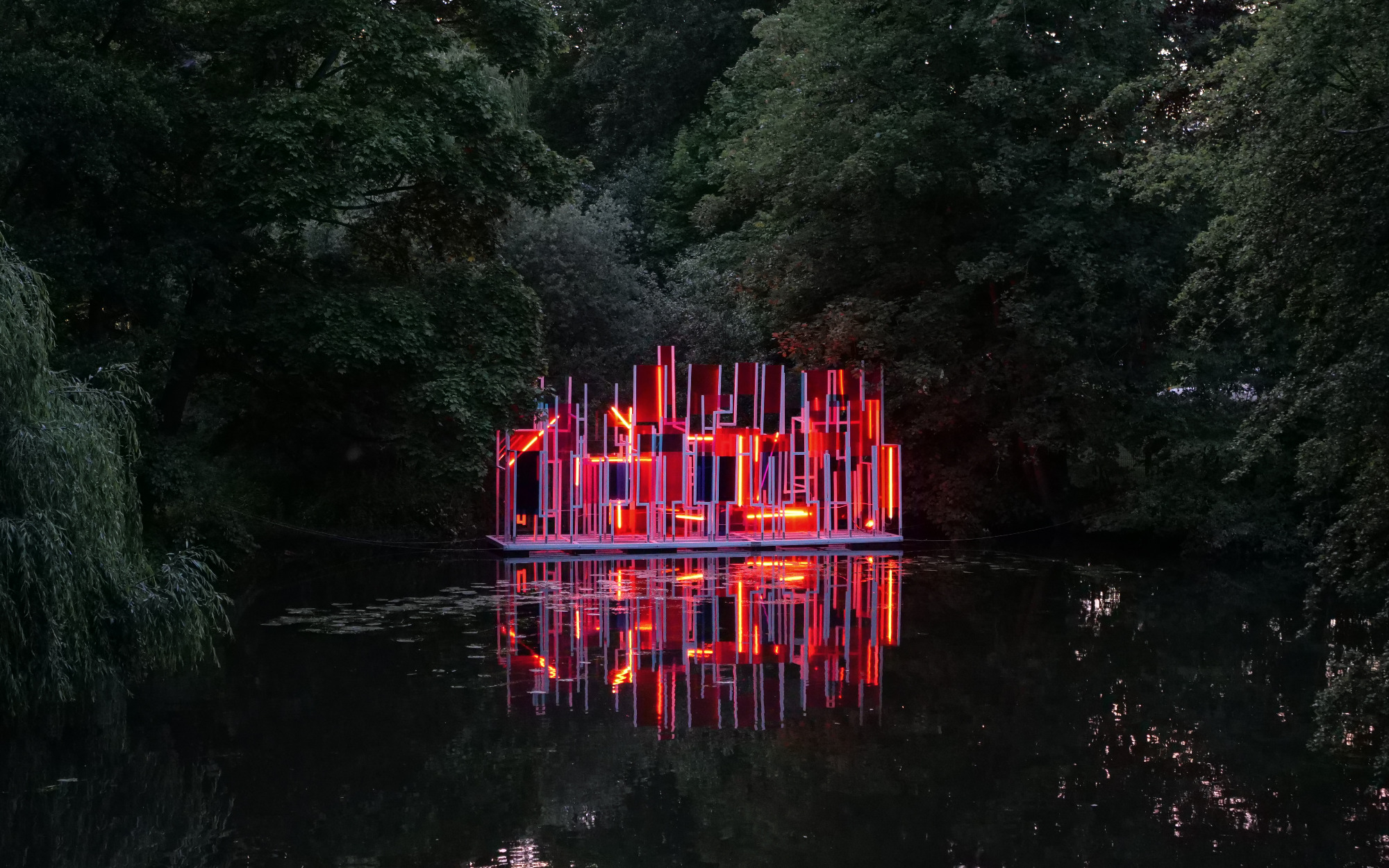
Light sculpture
Lichtparcours Braunschweig, 2024
Acrylic glass, coloured film, wood, plastics, lighting, cables, metal
825 × 220 × 425 cm
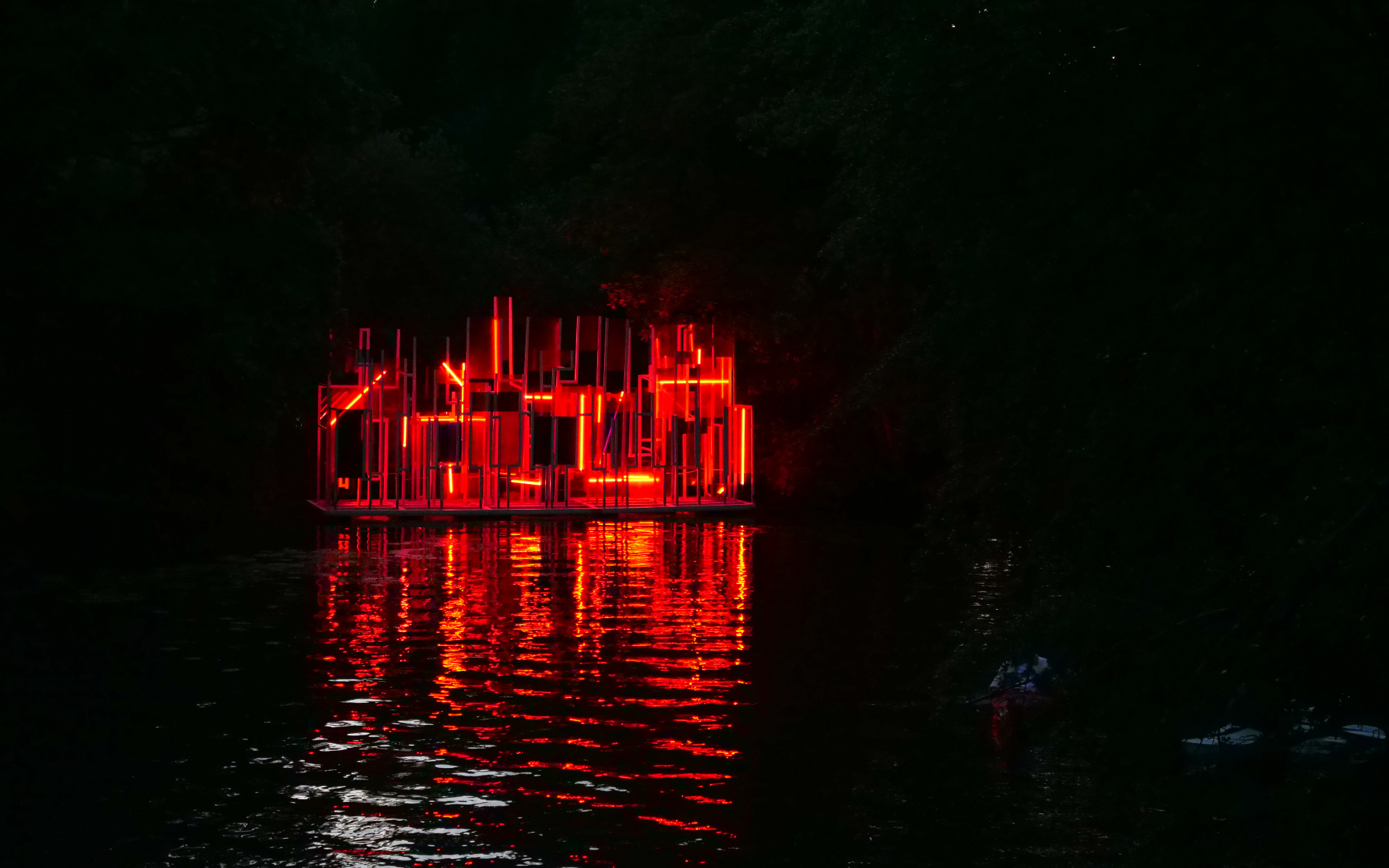
A light installation referring to the windows of Bruchstraße, a street of brothels. The windows there were measured and reinstalled, in the same size and number, about 200 metres away as the crow flies.
In some windows the lights flash like a disco, in others LEDs shift from scarlet to blood red. The LED revolution has displaced classic red light. What remains are names like Flattermann, Heiderose, Belami or Mademoiselle de Amour.
Jan Philip Scheibe erects a luminous monument to Bruchstraße. Whatever else resonates there, sleaze and pleasure, coercion and self-determination, freedom and inhibition, steps back. Light remains. Between the open-air pool and a hotel, at the remnant of the Münzgraben, where marshland once lay and later 33 half-timbered houses shaped the trade, a large-scale installation emerges during the Lichtparcours 2024: on a pontoon in the water, overlapping acrylic glass panes stand in various shades of red. Day and night, forms and light blend into a floating sculpture, an echo of the history of this in-between land.
Bornylacetat
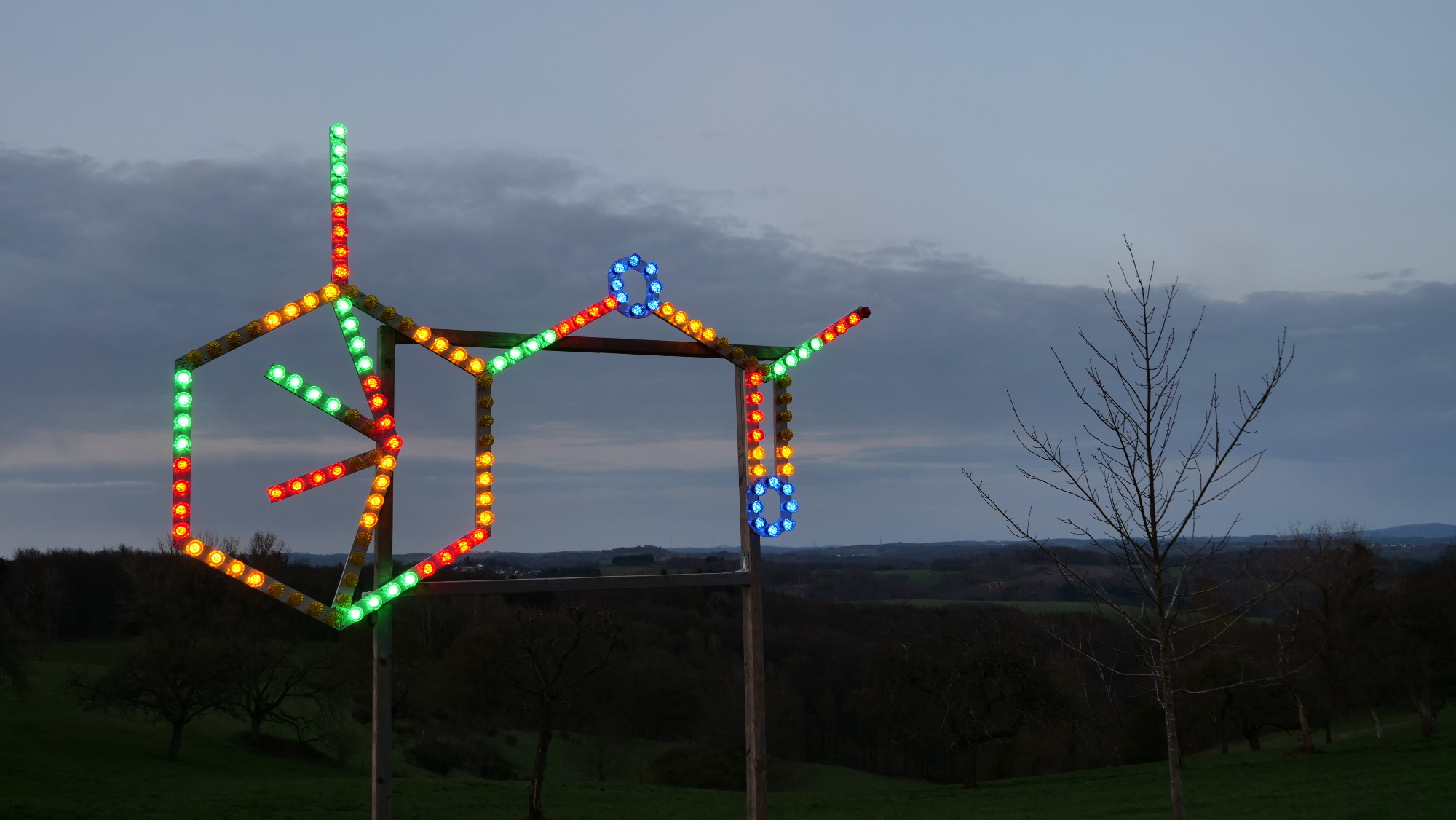
Installation
Kunsthaus Wäldchen, Windeck, 2021
Aluminium profile, diamond-shaped caps, LED lighting, wood, cables, control unit
320 × 210 cm
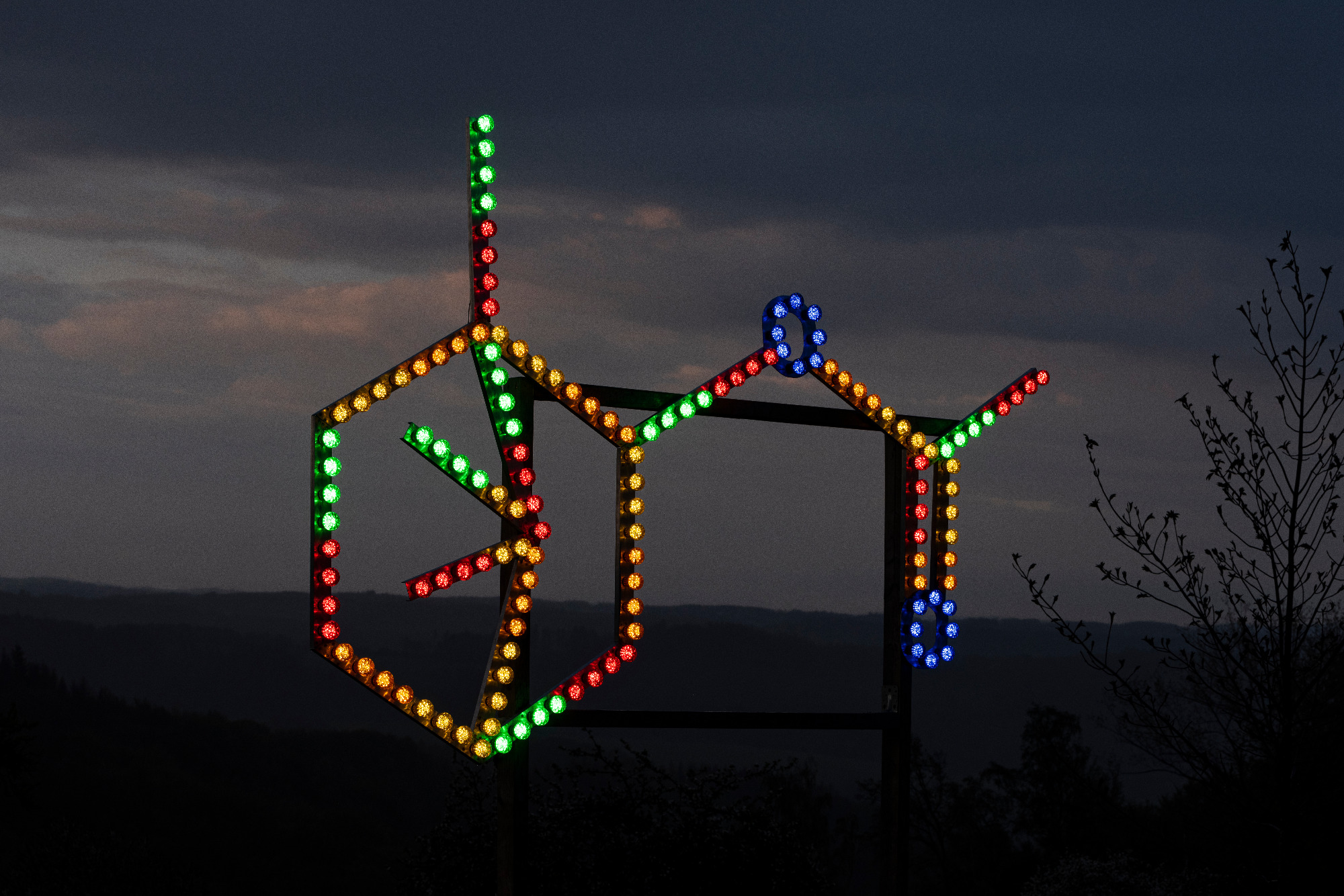
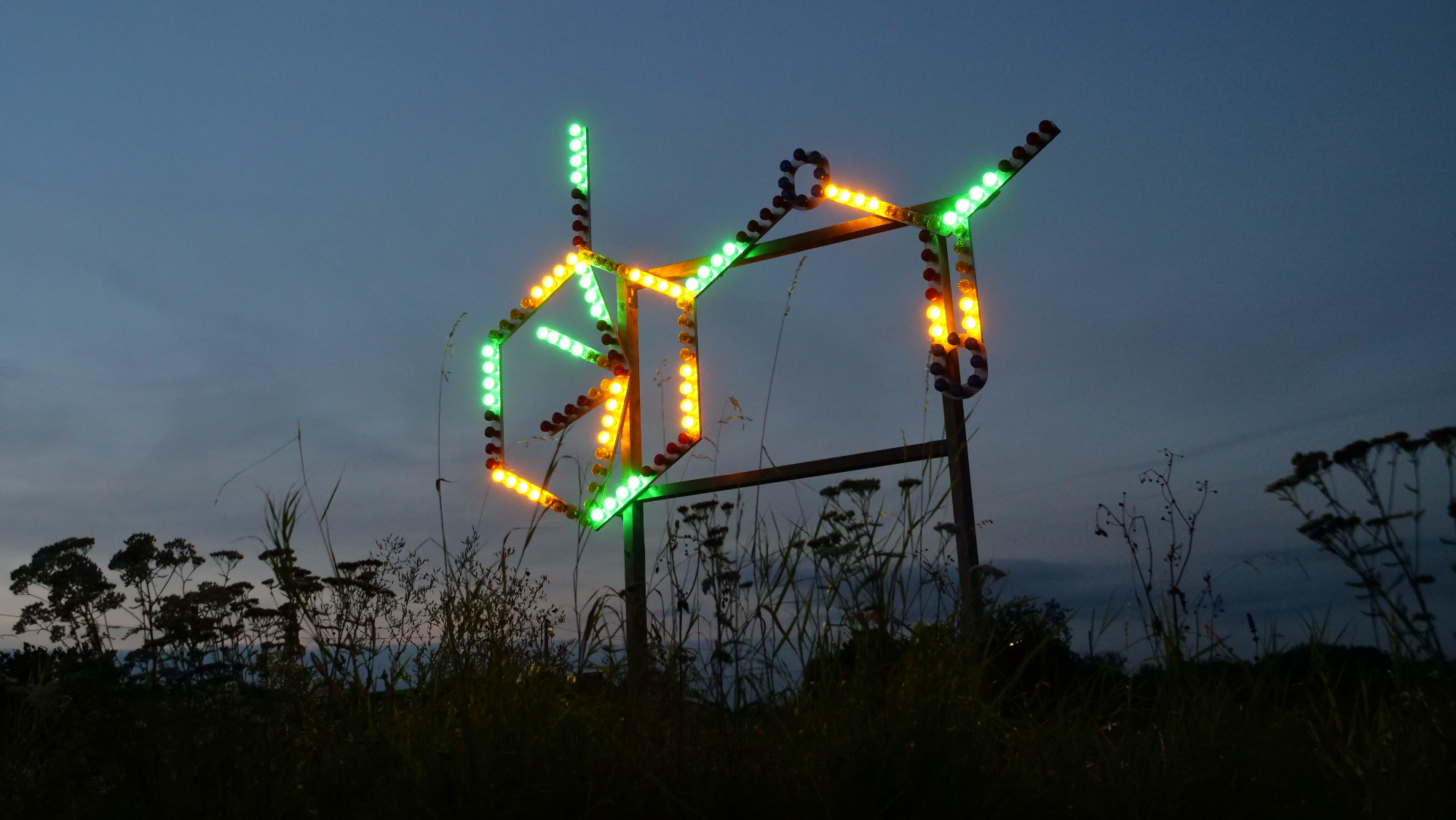
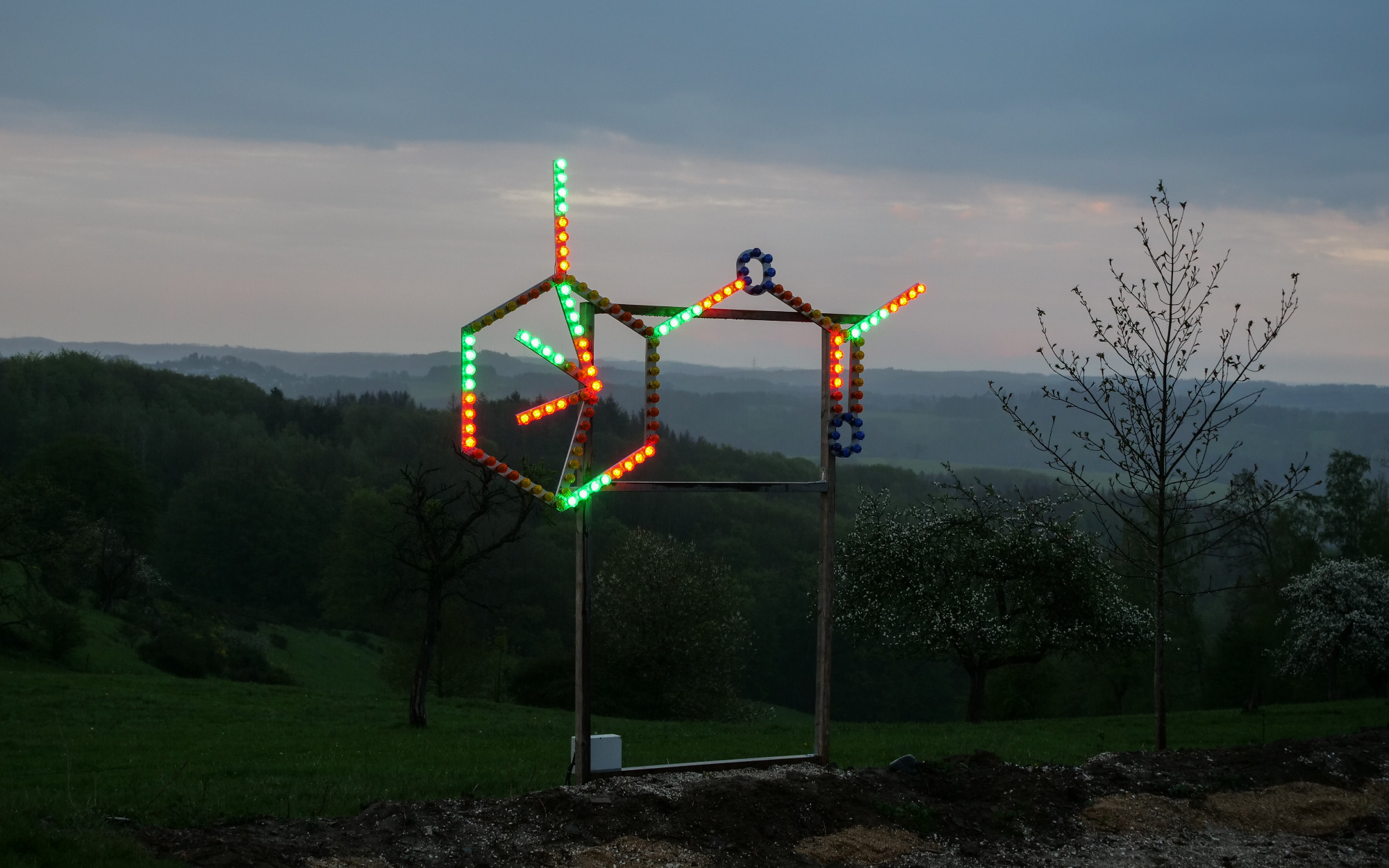
Caption: Model of the skeletal formula of bornyl acetate, the acetic ester that is a main component of spruce oil and resin.
Using aluminium profiles, the installation reproduces the skeletal formula of bornyl acetate, the main component of spruce oil and carrier of the typical spruce scent. Fitted with diamond-shaped caps borrowed from fairground aesthetics, a chase-light control creates a nervous, ever-changing space of light between molecular model and showman’s object.
While terpenes are celebrated as healing messengers in the context of “forest bathing”, the commercially shaped spruce forest is dying across large areas. Drought, storms and bark beetles leave behind bare hilltops and tree skeletons. The glowing molecule becomes a monument to a culture that is vanishing.
House of Wind
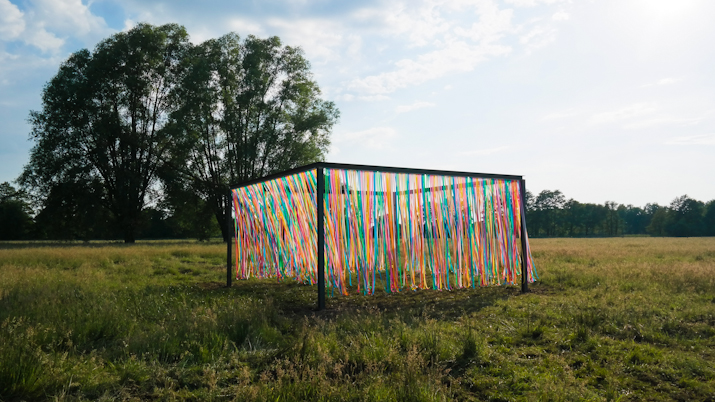
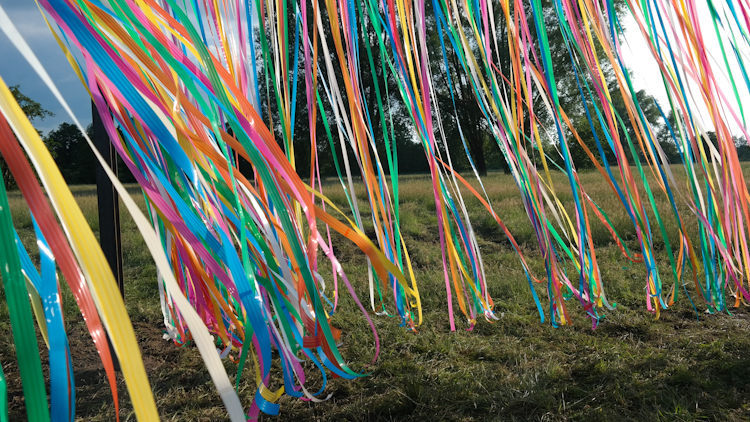
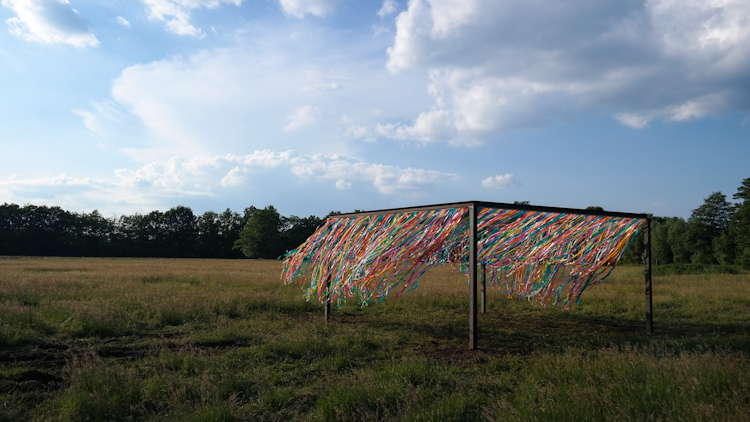
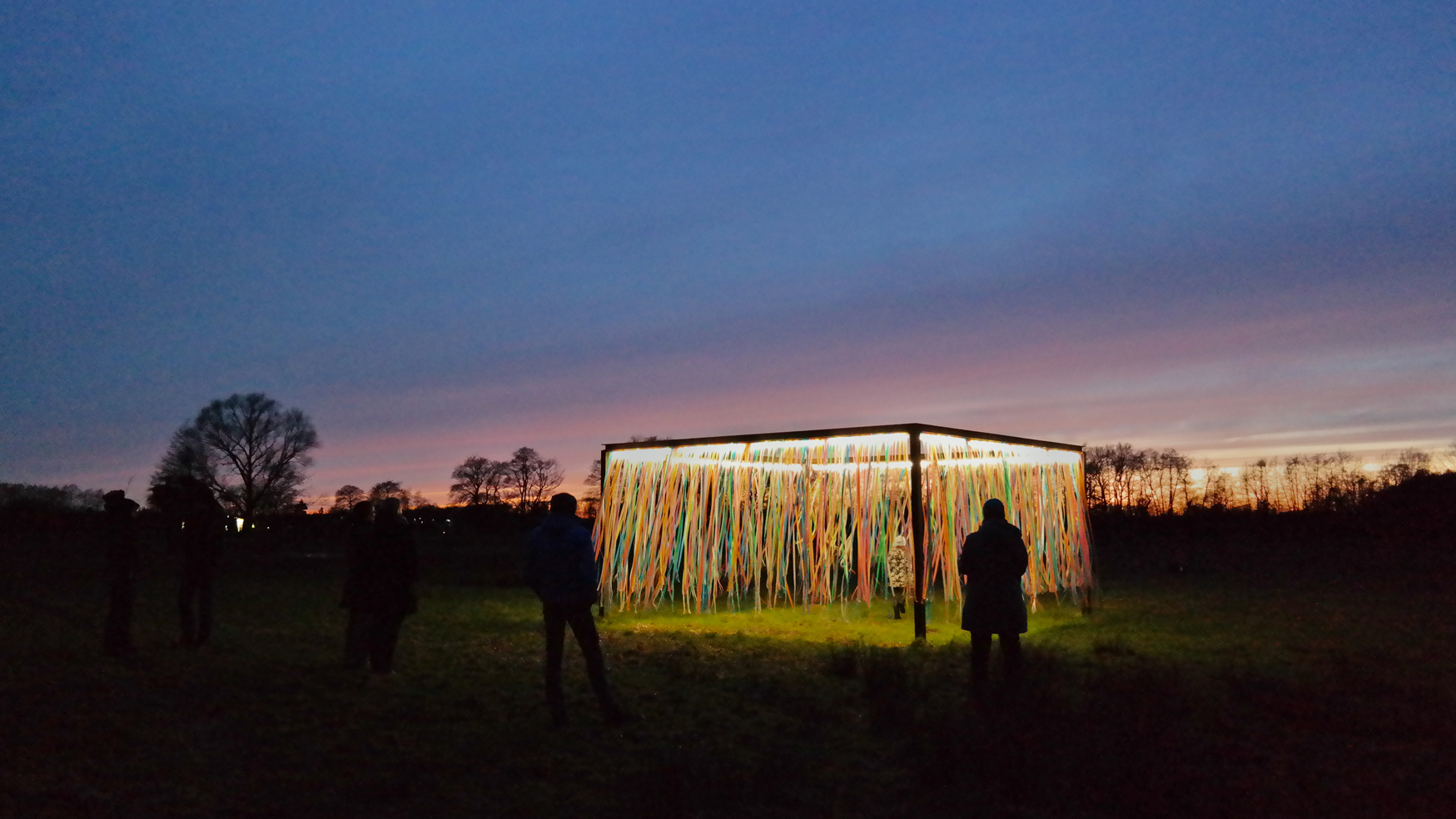
Installation
As part of INTRAREGIONALE, landscape art in the Hannover region, 2013
Steel, plastic, lighting, cables
550 × 550 × 270 cm
On a green space at the northern edge of town, right by the Hannover–Hamburg railway embankment, a space opens up, made of steel girders and PVC strip curtains. A fleeting makeshift structure. An in-between realm between perception and memory. House of Wind is a monument to the summer wind, the one from the artist’s childhood in the 1970s. The plastic strips in the doorways, originally meant to keep flies out, dance continuously: gently swaying, mightily surging. Linked with transistor radio, ice cream, raspberry syrup, flowers and butterflies, with sun-heated ground and its scent, the wind tells of a feeling for life. At the same time, House of Wind is a portrait of the North German landscape: north-westerly winds hint at the sea, clouds line up like strings of pearls, poplars rustle above swaying fields, a fleeting impression.
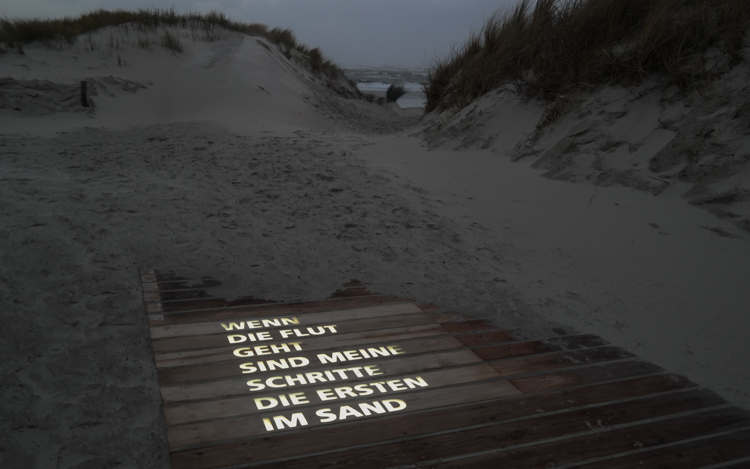
Wenn die Flut geht (When the Tide Goes Out)
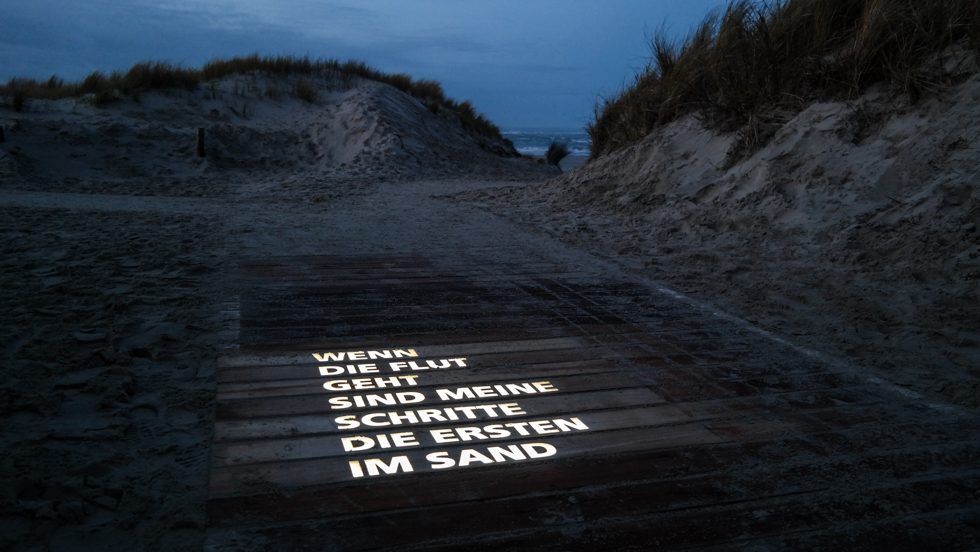
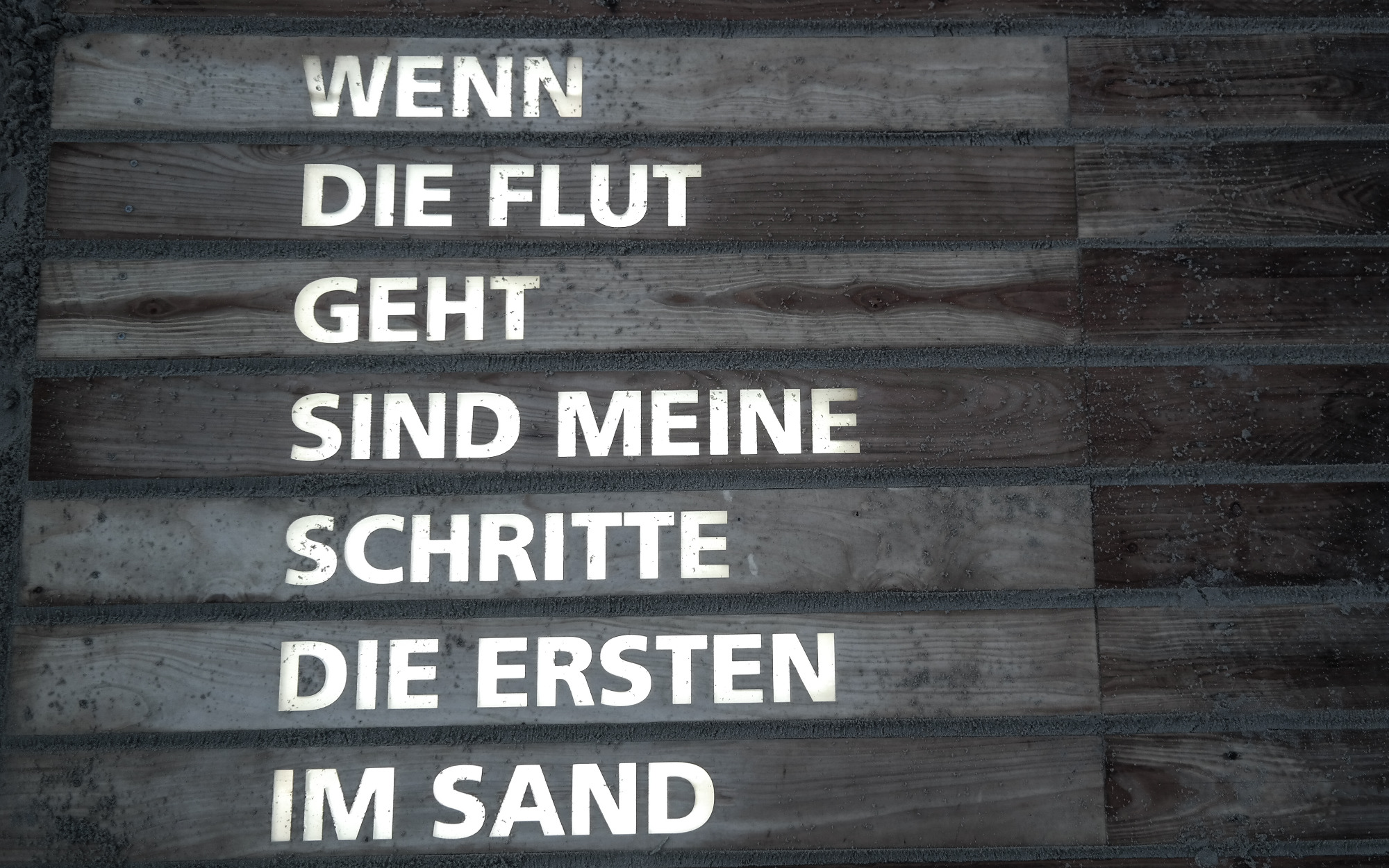
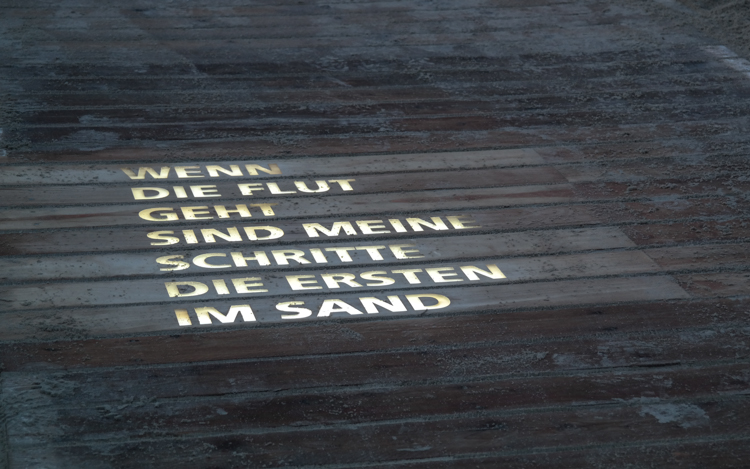
Word/light installation
Langeoog, 2018/2021
Wood, cast resin, cables, lighting
120 × 100 cm
With the retreat of the water, space emerges. With space comes trace. The work marks this moment, not as a romantic image but as a dawning awareness.
Landscape is not a backdrop but a system of forces, rhythms, interventions and uses, and we are part of it. We perceive landscape, we perceive ourselves within it. Yet rarely do we reflect on how landscape works and how we function in it. Wenn die Flut geht starts exactly here: as a monument to perception and to our position within the fabric of nature, time and action.
That the sentence became a calendar, a T-shirt slogan or even an obituary notice was not planned, but perhaps only logical.
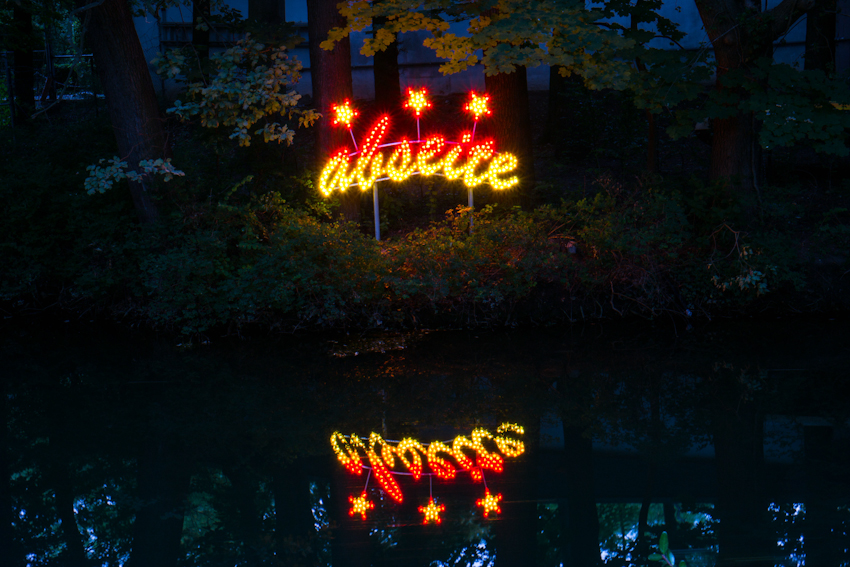
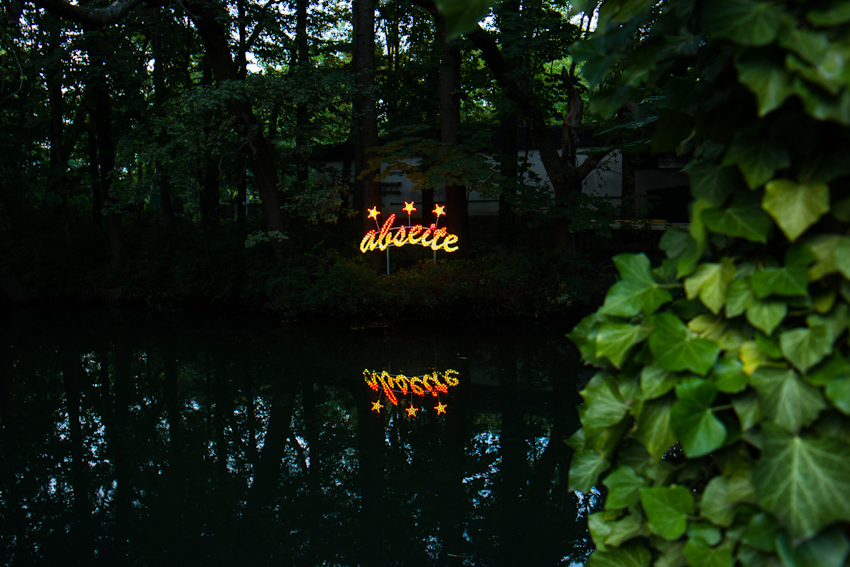
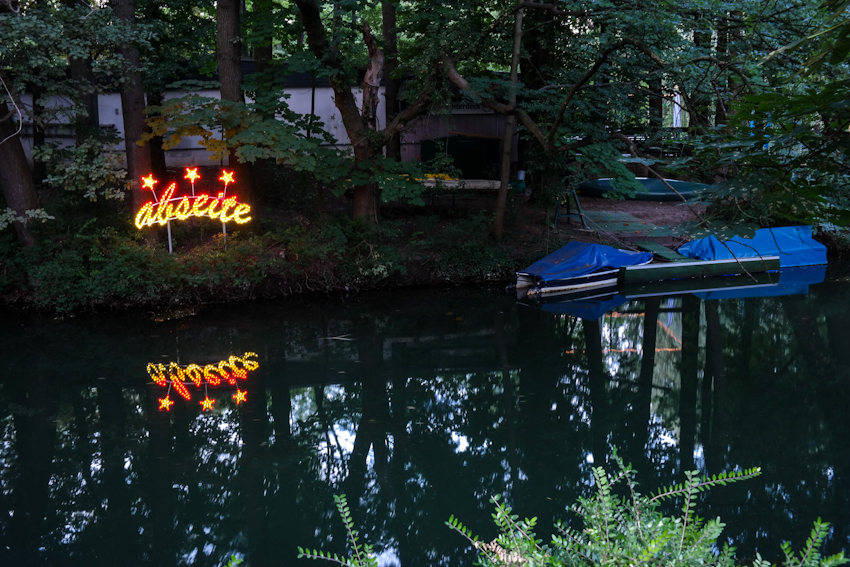
abseite (off to the side)
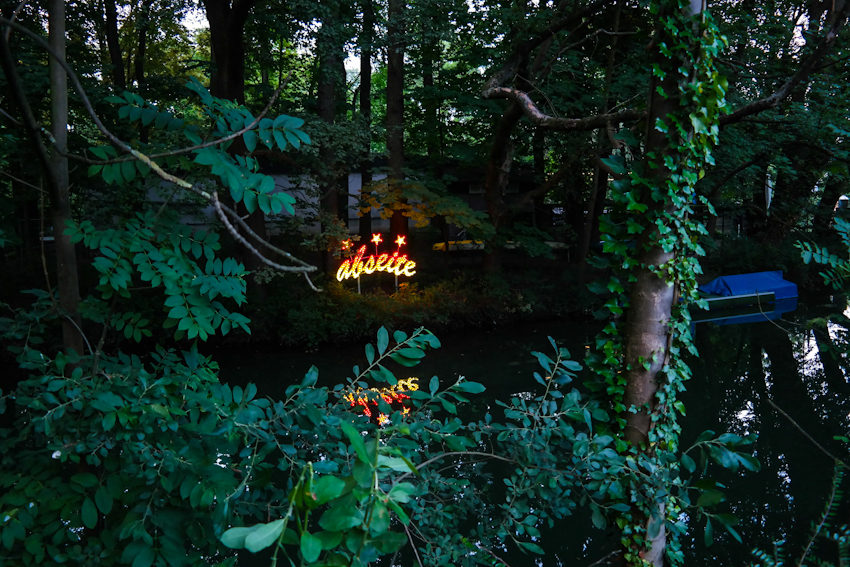
Word/light installation
Skulpturenpark Köln 2009 / Lichtpromenade Lippstadt 2013
Metal, plastics, control unit, lighting
240 × 160 × 6 cm
The illuminated lettering points to peripheries, to outsiders and marginal places, to remote, forgotten or ostracised places and existences. In the aesthetics of the funfair and showman culture, it also reflects an original position of art: between attraction and the sidelines, between spectacle and reflection. The blinking, colour-changing lettering with its stars was first installed in 2009 in the Skulpturenpark Köln and has been a permanent part of the Lichtpromenade Lippstadt since 2013..
Er macht seine Engel zu Winden (He Makes His Angels Winds)

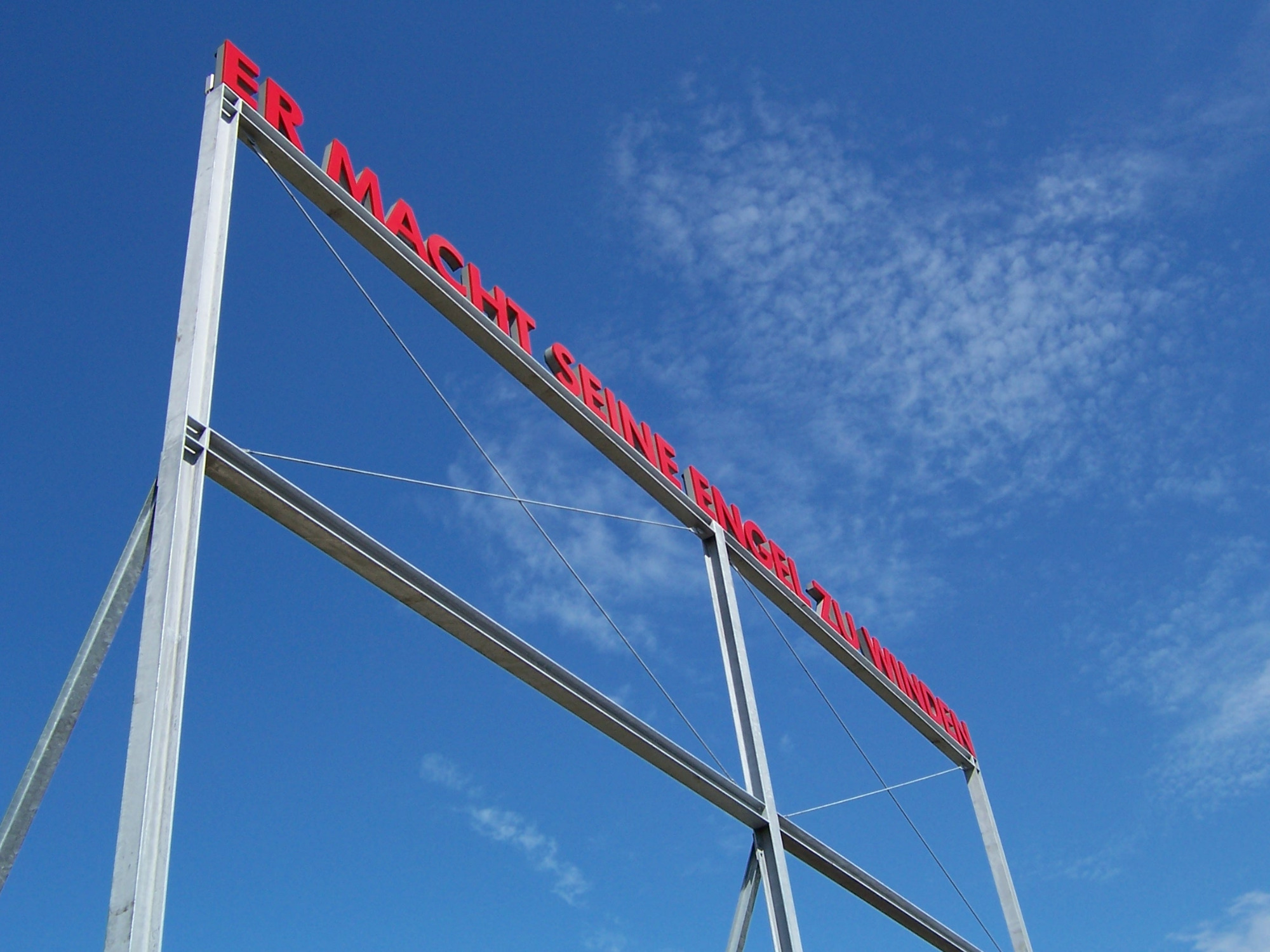
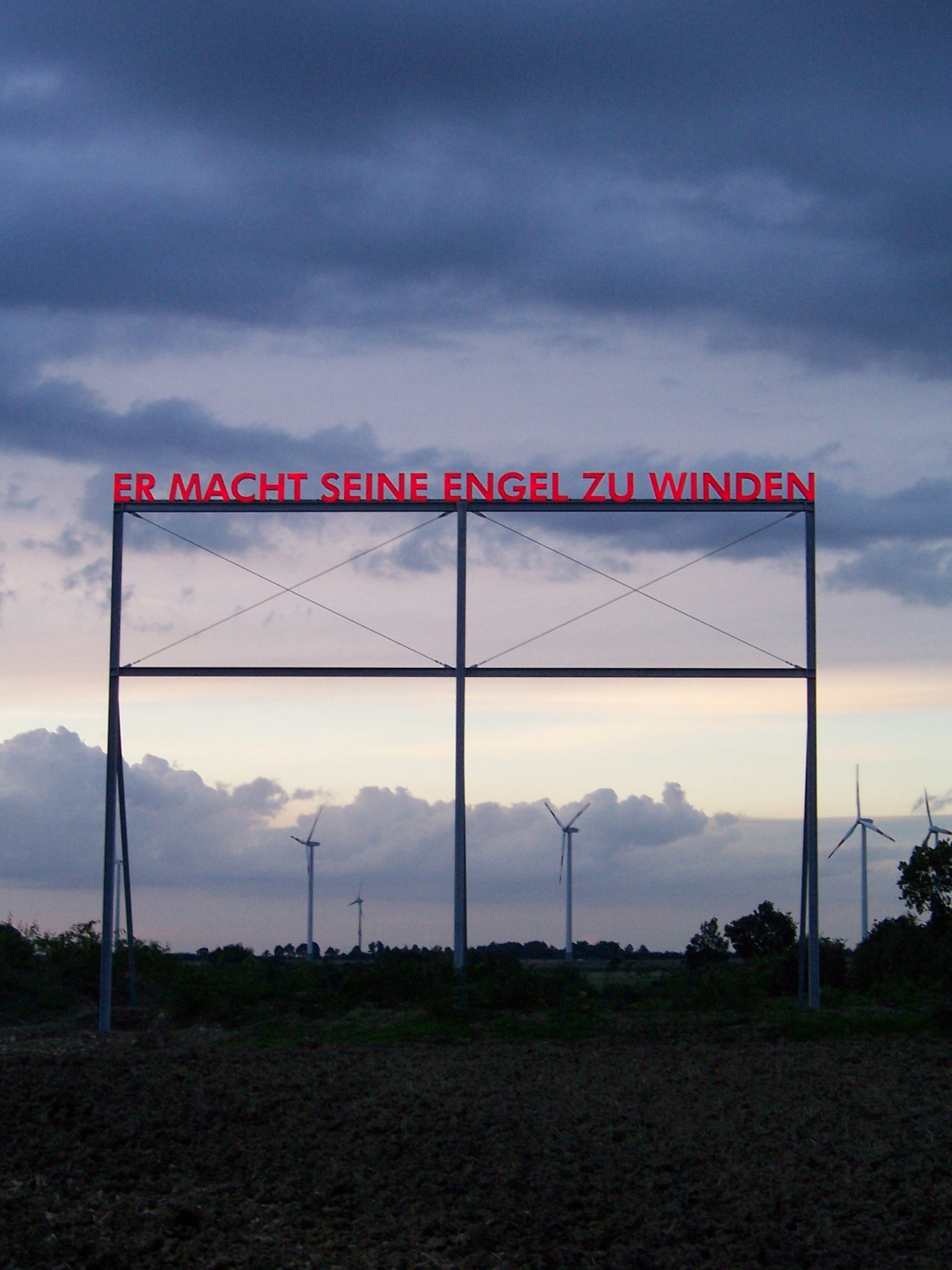
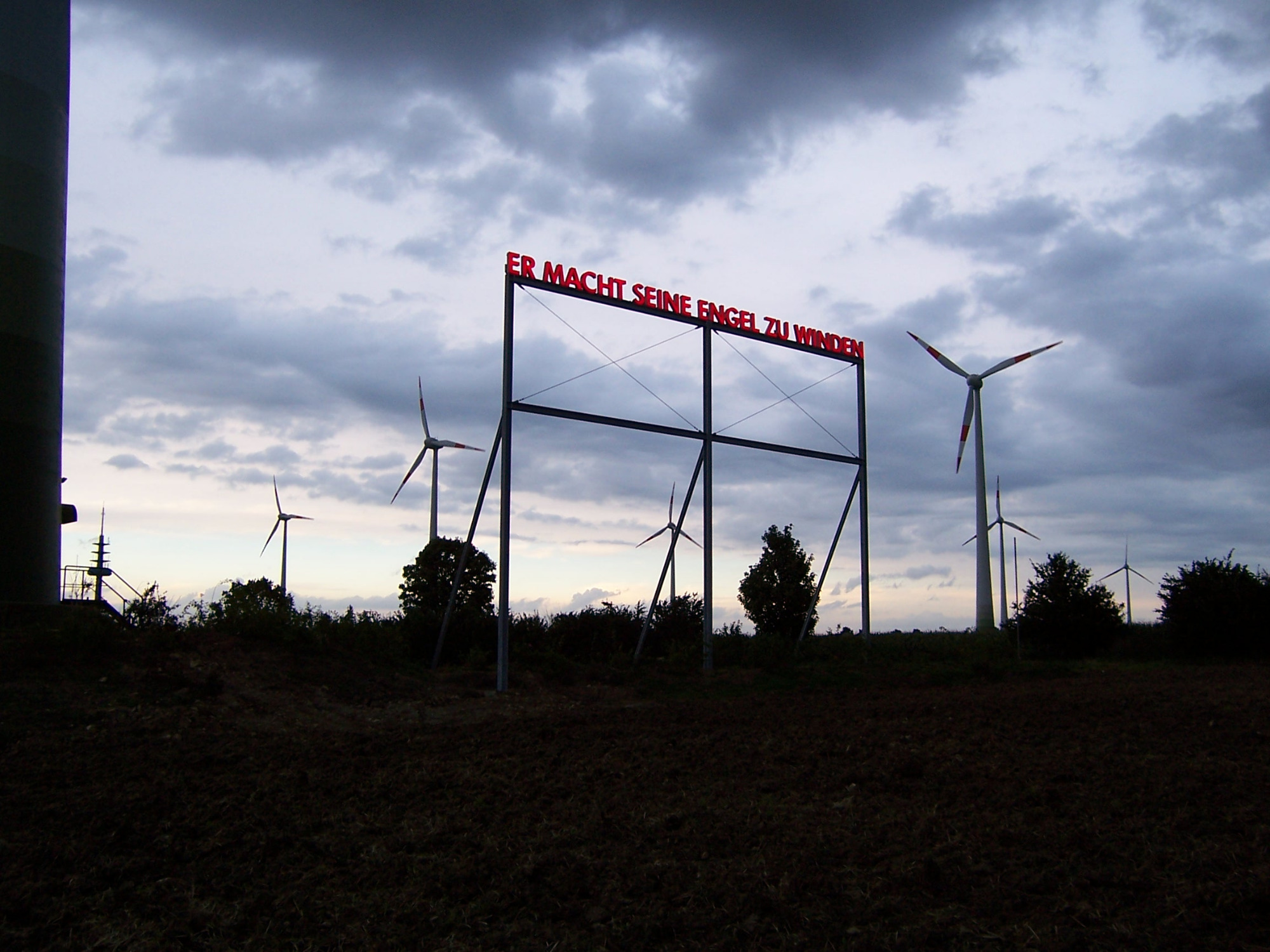
Word/light installation
Schöppinger Berg, 2005
As part of the Skulptur Biennale Münsterland 2005
Aluminium, paint, glass, neon, plastics, steel, concrete, cables
1600 × 1265 × 350 cm
WDR westart Meisterwerke
A feature on the installation “Er macht seine Engel zu Winden” in the WDR series WestART Meisterwerke. WDR 2019
Ein Schiff wird kommen (A Ship Will Come)
Installation
Kulturgut Poggenhagen, Neustadt am Rübenberge, 2010
Wood, cast resin, cables, lighting, metal
1200 × 500 cm
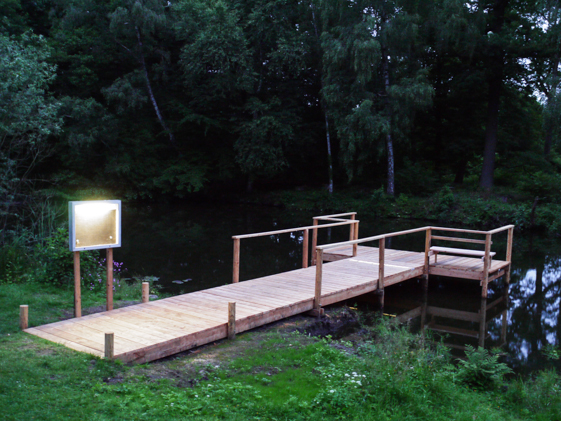
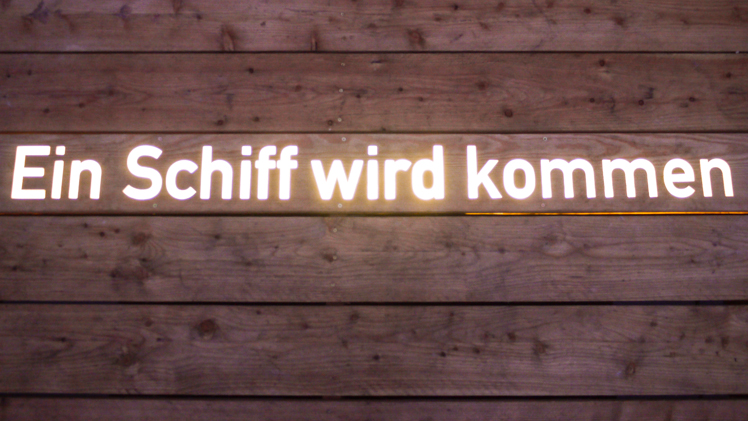
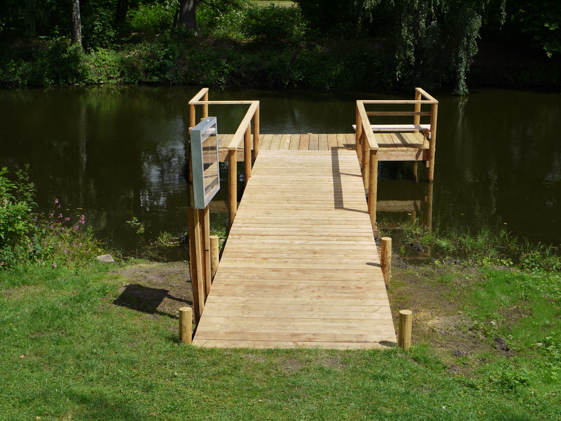
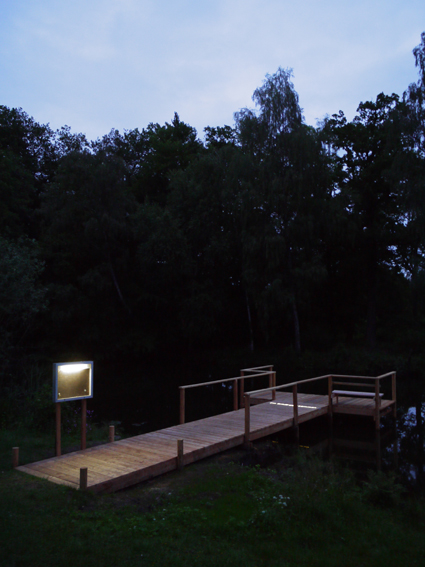
Since 2010, the installation has transformed the Toter Weiher (Dead Pond) at Kulturgut Poggenhagen into a seeming place of longing and departure: a jetty with a bench and a departure timetable evokes the imagery of harbour, travel and wanderlust. But no ship came. The installation leads the romantic motif of leaving into nothingness and makes waiting itself the subject. In the rural surroundings, where historical labour and contemporary art naturally go together, the jetty became a monument to a collective projection: the wish that real life begins elsewhere. Instead of departure, the place offers self-encounter. Not getting away but staying moves to the centre. Scheibe’s work shows how much landscape is overlaid with inner images, and turns a quiet pond into a stage of existential expectations that go unfulfilled and unfold their meaning precisely in that.